

The Jubilee Calendar and Messianic Expectation
/“Now when Jesus was born in Bethlehem of Judea in the days of Herod the king, behold, wise men from the East came to Jerusalem saying, ‘Where is he who has been born king of the Jews? For we have seen his star in the East, and have come to worship him. When Herod the king heard this, he was troubled, and all Jerusalem with him” -Matthew 2:2-3
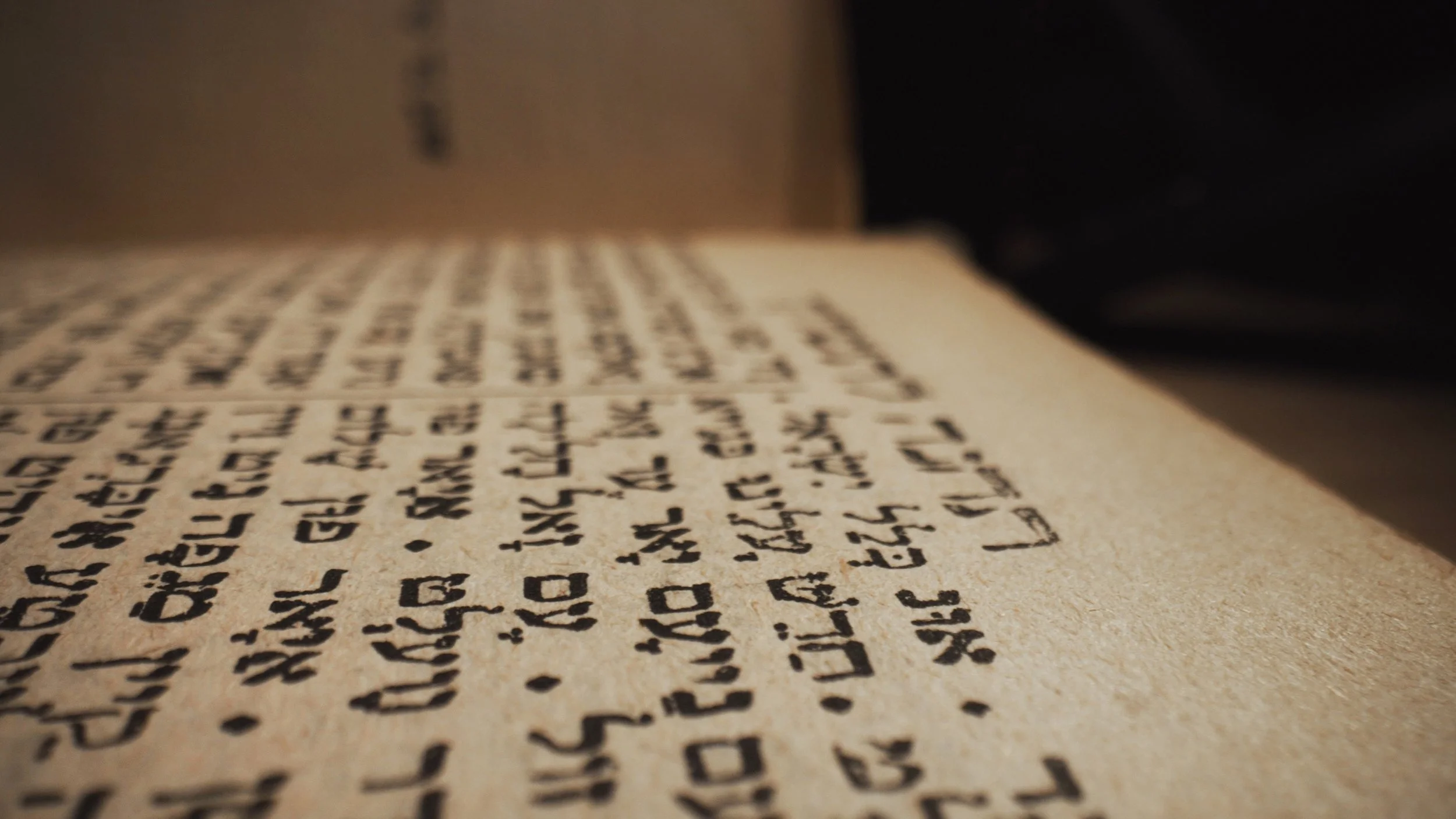
We wonder what was so troubling about this situation. Accounting for Herod’s history can help us understand that he thought that someone would want to usurp his throne, but was it all of Jerusalem with him?
We understand figures of speech and can apply the city name to the government. And when we think about it, we might recall that the ruling religious authorities in the temple at the time were the Sadducees, and that they acquired their position by cozying up to the Roman political authority.
It has recently been discovered that the general public was not troubled at all. In fact, most Jews expected the coming of the Messiah for a long time. That is why Jesus got such a large following at the time of his coming to maturity. But why was this expectation so widespread?
It turns out to be what we might call a little superstitious, really (though like us, the Jews at the time took their religion very seriously). Regardless of where anyone says this prediction came from, it was found in the Book of Jubilees, written sometime in the second century BC.
At the time, the particular calendar that was in daily use was a modified version of the Egyptian (Coptic) calendar from a couple of centuries prior. The creation of this calendar was in response to the secular changes made by the Greeks who changed the Egyptian yearly calendar. The Jubilee calendar, on the other hand, was based on Psalm 90:4: “a day is as a thousand years.” This calendar was based on the six days of creation followed by the day of God’s rest. Each day represented 1,000 years; this meant that at the end of 6,000 years from creation, the end would come - and with that, the Messiah.
Moreover, time was divided into Jubilee periods, each of which spanned 50 years. In the book of Jubilees, chapter 50:4 says that “From creation to the entry into Canaan, 49 jubilees had passed,” meaning 2,450 years had elapsed. There were then ten more Jubilee periods until redemption, implying another 500 years’ wait. That gives a total of 5,000 years, and so the Messiah was expected to come somewhere between 20 BC and 20 AD.
It is interesting to note that two of the three witnesses before Christ – Jubilees, 2 Enoch, and a text from the Dead Sea Scrolls – and two of the texts dated after Christ –Barnabas and Sanhedrin – are found in the Ethiopian Orthodox Canon.
One text written before Jesus, 2 Enoch 33:1-2, states, “on the eighth day of the week…the creation of the eight years begins.” This means that on the eighth “day” (i.e. 1,000 years) of the “week” (i.e. seven, 1,000-year days), the creation of the eighth year begins. In other words, the end of the 6,000 years was approaching and the final generation had come.
The other writing – a small fragment of the Dead Sea Scrolls called Melchizedek[1] – mentions that “Melchizedek makes atonement” for our sins. If the Messiah (referred here as Melchizedek) had the power and authority to forgive humans of their sin, then the conclusion is that he is God.[2] This is the Melchizedek to whom the book of Hebrews alludes (Heb. 7:15-17).
The two witness accounts that follow Jesus’ death and resurrection reflect this same expectation. Barnabas 15:1-8 reiterates the previous claim that Jesus fulfilled the Jubilee timetable exactly; Sanhedrin 97a says that “in the seventh millennium the world will be desolate...but the Messiah comes in the sixth.”
All this to say, there was a lively expectation that the Messiah would come in the first century – if not BC, then AD – though no one claimed to know the exact day.
By Richard H. Leigh, M.A. Historical Theology (Lutheran School of Theology, Chicago)
Outreach Facilitator
[1] Melchizedek is a fragment from 11Q13 from Qumran.
[2] This view is an idea modern-day Jews reject.
